ポッドキャスト・トランスクリプト
Linda Lacina, Meet The Leader: Welcome to Meet the Leader, the podcast where top leaders share how they're tackling the world's biggest challenges. In today's episode we share the books that have transformed how CEOs, best-selling authors, non-profit heads and even Harvard professors think, act and lead.
Subscribe to Meet the Leader on Apple, Spotify, and wherever you get your favorite podcasts. And don't forget to rate and review us. I'm Linda Lacina with the World Economic Forum, and this is Meet the Leader.
Angela Oduor Lungati, Ushahidi That book blew my mind. It's changed how I look at the world.
Nadya Okamoto, Period Someone who reads that book, it might change the way you think about how you spend your time and who you surround yourself with.
Linda Lacina, Meet The Leader: When's the last time a book changed your mind? Rewired your brain. Put everything in full colour. That's the best part of the moment when I ask CEOs and change-makers for the books that they recommend. Their picks aren't just good reads. They're usually books that transformed their views of their field, their role and even their responsibilities. Sometimes people feel this change on a molecular level.
It is an eclectic list this year. We have CEOs of multinationals, founders of startups, technologists and Ivy League professors. It is a list of book recommendations that I gather you wouldn't find anywhere else. But I hope that these picks find a spot on your own shelves and nightstands, and maybe even make their way into the hands of that impossible-to-buy-for person on your list this holiday season. Regardless, let the spirit of this list set the bar for you and what you read and take in in 2026: to see the world and your place in it in a fuller way.
Book: The Power of Geography by Tim Marshall
Linda Lacina, Meet The Leader: We’ll get started with books that helped people better understand the world around them, and with Angela Oduor Lungati.

Angela is the executive director of Ushahidi. That is a global technology non-profit organization that develops tools and open source software and mobilizes communities for good. It was founded in 2008 to monitor and map post-election violence in Kenya. Today, it helps people everywhere gather community-generated data and use that data to help tackle issues like human rights or even how we can adapt to climate change. Her book pick looks at a topic none of us think enough about: geography and how it can help us better understand big changes. Here's Angela talking about The Power of Geography by Tim Marshall.
Angela Oduor Lungati, Ushahidi: That book blew my mind because he has a very interesting way of telling the story about how the position of a particular country influences the geopolitics, how it engages with the countries around it and the resources that they have. And I think it was also timely when I read it because here we are today talking about collaboration in the intelligent age at a time when it feels like we are very fractured along geographic lines.
The geopolitical space… it's really hard to consume. So having that understanding of what could be driving some of these challenges will also help us to think about how we shift that. Is it primarily an economic pressure that is influencing why this country doesn't want to talk to this country? Is it a historic conflict? And how do we also deal with that? So I strongly recommend it.
Book: Pricing the Priceless: The Financial Transformation to Value the Planet, Solve the Climate Crisis, and Protect Our Most Precious Assets by Paula DiPerna
Linda Lacina, Meet The Leader: Sherry Madera is the CEO of CDP – that is the world's largest independent platform for surfacing climate and nature data. It's an organization that takes in data from up to two-thirds of the world's market capitalization, around 25,000 companies from all around the globe. Her pick helps us rethink how we value something so many of us take for granted: nature. Here's Sherry.
Sherry Madera, CDP: I also would really love to call out a book by Paula DiPerna and it's called Pricing the Priceless and it is really bringing in the equation of how is it that you start thinking about water and forestry and land use as something that is a key economic input. We never see a great big tanker moving fresh water from point A to point B. Maybe we will in the future.
It's not just the simplicity of seeing that weather changes are impacting our world, our climate. It's also about the financial risks that go behind it. In fact, I'd say that some of the great books that are out there, when you're starting to talk about nature and how it is that we should price it, really starts impacting how economics works.
It's not just the simplicity of seeing that weather changes are impacting our world, our climate. It's also about the financial risks that go behind it
”And one of the things that CDP is working on is considering how Earth-positive economics starts becoming the new norm. It's about integrating those things that were not priced before, the scarcity that we're starting to drive and understand through our environment. How is it that that's going to look going forward?
Book: Benjamin Franklin: An American Life by Walter Isaacson
Linda Lacina, Meet The Leader: Sanjeev Mankotia is the CEO of GaeaStar. Officially, that's an early stage hardware startup in San Francisco, and it's tackling the complex global single-use plastics problem with a simple product like a clay cup that can be made in easy-to-scale micro-factories all around the country. His book recommendation looks to history and what it teaches us about progress, patience and appreciating the long-term.

Sanjeev Mankotia, GaeaStar: The most recent book that I read was the autobiography of Benjamin Franklin by Walter Isaacson. It's a big, thick one. But it's amazing to see back then the challenges people were facing are exactly the conversations we're having today. So history does repeat itself.
The way I think it would help somebody is like, yeah, you got to play the long game. You know, recognize that, one, it is similar problems that we're dealing with today – maybe in a different flavour, but very, very similar. The key themes and principles are the same.
Up and downs are part of the journey, whether it's for personal life or in a startup. So if you're too close to the volatility, it might seem like it's whiplash, but if you step back, you know, it's trending in the right direction. That's what's most important.
Book: The Message by Ta-Nehisi Coates
Linda Lacina, Meet The Leader: Jumana Al Hashal is the co-founder and CEO of Voltair.ai. It is a company that creates AI-enabled solar electric refrigeration platforms that help refrigerated fleets transport more food with less waste and cost, while also reducing emissions. Her book helped her think differently about her role as a technologist.
Jumana Al Hashal, Voltair.ai: I would say that in the past year a book that completely affected me greatly is The Message by Ta-Nehisi Coates. While it's not about technology or about climate, it did kind of drive that introspection for me of what is my role as a technologist in saving the world. Right? I know it's a big question, right?
You know, we all want to save the world. But sort of what is our role in kind seeing the world and facing the hard truths as they are in the world, and how does that set us free, and set our work free, and allow us to work with a lot more ease? I would hope they would question what they accept for granted about the world. And what they accept for granted about themselves. And I hope it invites the same introspection for what is your role in this world and in your chosen profession. I highly recommend The Message.
Book: The Vagina Business by Marina Gerner
Linda Lacina, Meet The Leader: Alicia Chong Rodriguez is the founder of Bloomer Tech. That is a startup that integrates medical grade sensors into everyday garments such as a wearable bra, that basically creates a medical device that can bridge a health gap for women. It collects data and signals from the body to better understand her heart, her lungs, her hormones and her metabolism, all to reduce mortalities and improve outcomes. She shared with me a book that drives home the critical role that business can play in helping to further bridge health gaps. Here's Alicia.
Alicia Chong Rodriguez, Bloomer Tech: The Vagina Business by Marina Gerner, I really recommend it. I think it's amazing to read a book that compiles all of this history around the women's rights movement going into The Vagina Monologues. And now we're in the ‘vagina business’ and that part of innovation because we are building a world that includes all of us and not just some of us.
And we're thinking about all of the different dynamics that create change to make this world better because health is the new wealth so that we can actually make a difference in everyone's lives. So I really like that. That book gives a lot of the different perspectives in what the health of women actually is and how businesses are going to disrupt what we've seen over our lifetime so far.
Book: Doppelganger: A Trip into the Mirror World by Naomi Klein
Linda Lacina, Meet The Leader: Books on this list help the leaders better understand the moment that we're in. Leaders like Nathan Méténier. Nathan is the co-executive director of the Youth Climate Justice Fund. That's a movement to fund youth-led global environmental solutions. That group has funded more than 90 initiatives in 45 countries and was recipient of the World Economic Forum's first-ever climate 'Oscars,' our 2025 GAEA Awards. That's a recognition that honours special partnerships that advance critical climate and nature goals. His pick can help us think a little bit about political moments and also help us to think outside our bubbles.
Nathan Méténier, Youth Climate Justice Fund: Naomi Klein, who's really known for the work that she's been doing on a lot of different topics – both branding and the wars and also more recently the Green New Deal, just wrote a book called Doppelganger – which I think is absolutely incredible in understanding the moment we are in in terms of what are the states of our democracies, what are the state of the inequalities that we have in the world.
I think this is a huge invitation for us to think outside of our bubbles, outside of our sector, and really engaging and seeing people who also don't think the same way that we do
”I thought it was really interesting because, you know, when you look at the voters of some of those populist leaders, you actually find out that a lot of young people are voting for those young leaders. And of course, this is extremely scary for, you know, people who work in this sector who try to see the young people. And I think this is a huge invitation for us to think outside of our bubbles, outside of our sector, and really engaging and seeing people who also don't think the same way that we do.
Because if we don't do that, we push so much that the backlash is too strong and it's undoing a lot of what had been obtained – climate policies, social justice policies, rights that we have obtained. So this is the priority for me to really think about in the future.
Book: The Beginning of Infinity: Explanations That Transform the World by David Deutsch
Linda Lacina, Meet The Leader: I had the chance to talk to Steven Pinker this year. He's a renowned Harvard cognitive psychologist who studies the big questions facing human nature – things like why do we fight and what helps us get along? He has a new book out called When Everyone Knows That Everyone Knows and we talked about his research on progress and how humanity is doing better than we often think it is. He shared with me a book that he found inspirational. And if it inspires him, it's probably worth any of us paying closer attention. Here's his pick.
Steven Pinker, Harvard University: David Deutsch's The Beginning of Infinity, for me, was an inspiration. He's a physicist. He's an expert in quantum computing, among other things. But it's a rational grounding of the very idea of progress. How can it be possible? And I think perhaps more than anyone, he's thought through what it is about, just the nature of ideas, the nature of reality that make progress possible.
Book: The Molecule of More by Daniel Z. Lieberman and Michael E. Long
Linda Lacina, Meet The Leader: Many books helped our leaders better understand themselves and the way they navigate the world.
That was the case for Kian Katanforoosh. He is the CEO of Workera. That's an enterprise platform that uses AI to help organizations measure, develop, and mobilize their workforce's skills. His book pick helped him think a little more deeply about what motivates him and how to not lose sight of what's really important for his teams.
Kian Katanforoosh, Workera: I read a book called The Molecule of More that talks about a lot of entrepreneurs being highly 'dopaminergic', which is that you are trying to solve problems and make unknowns become knowns, and you tend to be competitive and try to seek another unknown and solve another problem.
And I think that's something that is important to be aware of, but also one way that it helped me reading that book is I realized that I always chase certain goals and try to chase the next one and I forget to celebrate when we reach them, a certain goal. And so, you know, my team and I, we made a promise to each other to celebrate our wins whenever we can. And knowing that in the startup world, a lot of us are highly 'dopaminergic', let's not forget to celebrate our wins along the way because that energy is necessary.
Book: It’s Sid Bernstein Calling by Arthur Aaron
Linda Lacina, Meet The Leader: Diallo Powell is the CEO and co-founder of Stak Mobility. They run a vertical self-service parking tower that both saves space in big cities, all while providing electric vehicle charging. An entrepreneur, he talked to me at the Urban Transformation Summit in San Francisco this Fall about one founder's story that stuck with him. Here's Diallo.
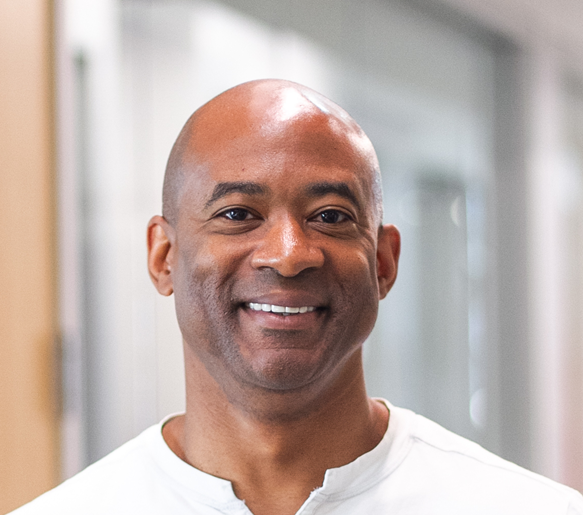
Diallo Powell, Stak Mobility: A book that I read a few years ago is called It’s Sid Bernstein Calling. It's not your typical founder story. It's actually the promoter who was behind the British Invasion. He was the promoter for Woodstock. And he really created a role that didn't exist at all in the music industry, but had a vision for what the music industry could look like and he absolutely revolutionized it.
It's a book that I was really inspired by, the ability to just stay focused and create something that didn't exist yet but just have the faith and confidence that it should and would be successful, and ended up having such a huge impact on an entire industry. So, it's a book I recommend, it is a book that I've given out as gifts, and I take a lot of lessons from it.
I want founders to be inspired and have belief in themselves and know that there's going to be a lot of failure along the way. There's so much discussion in the book about the number of times he's failed. And even after a major, major success, the very next step was a massive failure but kept coming back
”I want founders to be inspired and have belief in themselves and know that there's going to be a lot of failure along the way. There's so much discussion in the book about the number of times he's failed. And even after a major, major success, the very next step was a massive failure but kept coming back and taking more swings and taking more at bats. And I think maybe that's the thing that speaks to me the most.
Book:
The Courage to Be Disliked by Fumitake Koga and Ichiro Kishimi
Linda Lacina, Meet The Leader: Liz Centoni is Cisco's chief customer experience officer. She leads a massive team to help customers make the most of their technology investments. Being innovative in her role means pushing for new thinking. To that end, she recommended one book that can help any of us get more comfortable with the unpleasant side of change. Her book pick: The Courage to Be Disliked by Ichiro Kashimi and Fumitake Koga.
Liz Centoni, Cisco: The Courage to Be Disliked, I think the number one thing I loved about that is the power, your power. And I've struggled with this a little bit. And it's funny most of the conversations have been about AI and agentic AI and when is that coming into CX? And we're experimenting with that. But I'm going, boy, we’re talking about giving a virtual agent agency. And yet what we don't talk about very often is around the agency that we have, the power that we have.
And when you know that you have that agency, you don't need to be part of the groupthink. It's not just about the recognition because it's important, especially one of my mentors once told me men are promoted on potential, women are based on performance. I think that's super wise. We're like, okay, if it's on performance, I need to make sure that I'm recognized.
But when you step back and you look at it and go, hey, if I'm doing the right thing and it's not just about being recognized, it's not about being the loudest voice in the room, that's where the pause comes in. It's about being intentional. It's about knowing that the authenticity that you can bring forward and the power and the agency that it gives you.
That book has helped me immensely, because I can't remember who recommended it to me, and I thought, what an odd title, The Courage to Be Disliked. Even the person who says, I'm okay if people don't like me, I don't quite agree because as humans, we want people to like us. But separating that out in terms of going, there's an agency that you have in terms of the power. You don't need validation for everything. I actually saw a great quote that says, "You're not a parking ticket, you don't need to be validated."
Book: Calling In by Loretta J. Ross
Book: Validation by Caroline Fleck
Book: I Am The Cage by Allison Sweet Grant
Linda Lacina, Meet The Leader: Of course, so many books offer key tactical advice that help people level up the way they lead. That's the case with our next books, especially those picked by Adam Grant. He's the Wharton organizational psychologist and best-selling author whose books are likely on your shelf right now. In fact, he is the most recommended author on Meet the Leader. And as the foremost expert on work and driving change, we're excited to have his picks here. You can bet they are well worth your time. Here's what he had to say.
Adam Grant, Wharton: Calling In by Loretta Ross. It's my favourite book on how to fix ‘cancel culture’.
Validation by Caroline Fleck. She's a therapist who studies how to make people feel seen and heard. And the skills she teaches I think are as important for leaders and employees as they are for people at home, managing friendships and parents talking to their kids and even maybe husbands and wives and partners.
And then one other that I loved – I'm a little biased on this one – my wife, Allison Sweet Grant, has a novel called I Am the Cage. And it is a profoundly moving look at how our past trauma shapes our future and how we can rewrite our stories.
Book: Mindset: The New Psychology of Success, Carol Dweck
Linda Lacina, Meet The Leader: Alfred Stern is the CEO of energy and chemicals company OMV. Our podcast with him earlier this year looked at how the company that got its start in the '50s as Austria's state producer of oil and gas is now a multinational, focused on sustainability and tackling climate change, including using its deep knowledge of the Vienna basin to develop heating districts powered by geothermal energy. His book drives home an important reminder to us all that we're never done evolving, and we're never done learning from each other. Here’s Alfred.
Alfred Stern, OMV: If you just give me one book, I would recommend to everybody Mindset from Carol Dweck about growth mindset, because I think accepting the fact that none of us are born with the perfect skill set, but that we all have the capability to learn from each other, to learn from mistakes, to take challenges as an opportunity to grow and not as an opportunity to run away and escape. That if others are doing something excellent, it's not a competition, but it's maybe an opportunity to learn and to copy some things that we can also, in order to be more successful. This is something that we all need more than ever before.
Book: Who Not How by Dan Sullivan and Dr Benjamin Hardy
Linda Lacina, Meet The Leader: Ayumi Moore Aoki is the founder of Women in Tech Global. That's an organization designed to empower and educate women in tech. She's a serial entrepreneur, and a busy woman. She's also currently pursuing her doctorate. Her book pick, Who Not How, by entrepreneurship coach Dan Sullivan, could be a game changer in how you tap into the expertise around you. It might even transform how you move forward on your most stubborn projects. Here's Ayumi.
Things can be done by surrounding yourself with the right people. Look for people that can help you in every single state of your life, to facilitate your life and to make you be able to perform better and to do more
”Ayumi Moore Aoki, Women in Tech Global: This book is called Who Not How. And I think it's a wonderful book because it shows how you don't have to know how to do everything. Things can be done by surrounding yourself with the right people. Look for people that can help you in every single state of your life, to facilitate your life and to make you be able to perform better and to do more.
Book: Meditations for Mortals by Oliver Burkeman
Linda Lacina, Meet The Leader: And now for our last section. I always find that the best books become part of you and that their lessons step forward when you least expect it. These are the books that help you meet the moment.
To kick this section off, we have Mohit Joshi. Mohit is the CEO of Tech Mahindra. That's an Indian multinational information services and consulting company. Unique about Mohit is the fact that while many people in his sector studied engineering, Mohit kicked off his studies with history as an undergrad and followed that up with an MBA. It's a foundation that armed him with a special set of tools that help him understand progress and context. Here's Mohit and his book recommendation.
Mohit Joshi, Tech Mahindra: There’s a wonderful book I read just a couple of weeks ago called Meditations for Mortals. And it was really a powerful book about how we should think about reading, how should we think about our emotions. And the one thing that really stood out to me is, you know, all of us have sort of difficult days, right? But in the back of our mind, we always think that there'll be this one time in the future where you'll be trouble free.
And when you don't reach that point of time, you get very anxious or you get very irritated. I think one of the learnings for me, one of profound learnings for me from this book was there's never a time when life will be trouble-free, right? So you should get used to the fact that life will always have, you know, challenges and moments of great joy.
And that's life, right? You know, when those troubles disappear, life will end up becoming very bland. And I think this was a great learning for me. I also actually re-read, I don't want to sound very pretentious, but I re-read The Odyssey after a long time. Yes, it was a translation by Stephen Mitchell, a beautiful translation. Again, it's about the journey of a leader who is a little bit lost and sort of yearning for home.
Book: Pleasure Activism: The Politics of Feeling Good by Adrienne Maree Brown
Linda Lacina, Meet The Leader: Nadya Okamoto is a social entrepreneur who got her start founding a nonprofit as a teenager that distributed tampons and menstrual pads to homeless women in San Francisco. It's an organization that eventually grew to become one of the largest youth nonprofits in the world. In her work, she learned too late that the hard-driving girl boss culture wasn't all it was cracked up to be. She's now the founder of period brand August, and she shared with me a book that reminds all of us to make time for ourselves, especially as leaders. I'll let her tell you more.

Nadya Okamoto, August: I would actually say the most influential book in my career has been Pleasure Activism by Adrienne Maree Brown. And it's really about just like how capitalism has just bred us to be like depressed robots who are obsessed with utility and finding pleasure in our lives and in sex and work and life is the way that you can best kind of reclaim life. As someone who reads that book, it might change the way you think about how you spend your time and who you surround yourself with.
Author: Viktor Frankl
Linda Lacina, Meet The Leader: We'll finish this episode with a recommendation from David Steinbach. He is the chief investment officer at Hines, a global retail investment management company. David talked to me about the author, philosopher, psychiatrist and Holocaust survivor, Victor Frankl. Viktor wrote many books, including Man’s Search For Meaning, but David was more focused on Viktor's message than any one single work. And I think we can agree Viktor's message is more important than ever. Here's David on how Viktor Frankl's works speak to him.
David Steinbach, Hines: Looking at your circumstances and what is the fundamental meaning of life for you. And I think for any great leader who can be a decision maker, they need to know their ‘why’ and why are they here, why are doing what they're doing, what is their meaning for whatever they're taking on in life.
And I think without a well-informed why, and a well-informed purpose and meaning, I don't think great leadership can be attained, because I think that person is chasing after things that are going to flame out really easily. Or circumstances can get difficult, like with Viktor Frankl ending up in Auschwitz, those are very difficult circumstances.
The minute you have your why and your meaning, it allows you to reframe any and every circumstance and situation, and even things that are hardships can become something that you are able to work through
”But the minute you have your why and your meaning, it allows you to reframe any and every circumstance and situation, and even things that are hardships can become something that you are able to work through, in a very meaningful way, and be able to find almost a radical gratitude for everything that's happening around you. And I think that is probably the deepest and most fundamental thing for any leader, to be the great leader, that they could be is to find their why and their ultimate meaning.
For me my why is very much embedded in many personal things. I mean, it's my family, it is my faith. It's so many things that are driving me outside of decisions that I make day to day at work. And, you know, for me those whys drive me to see the world as a place that I want to make better. And I want my actions and my decisions and my intellect to be able to drive the world to a better place.
And I hope that after my time is done that I pass the baton, whatever way that means, that the world is truly better for the impact I've had. And that for me is everything. And that helps me see the bigger picture. That helps me to see the long-term. Helps me see, even when things are rough and difficult, it helps me take my eyes above the tree line, and I can see the horizon in a very special way. And I think that for me is my motivation and it's why I'm here.
Linda Lacina, Meet The Leader: We’ll leave it there. Thanks so much to all these leaders who spoke to me and my colleagues all around the world this year. And thanks so much to you for listening. To find more podcasts, including my colleague's podcast Radio Davos, go to wef.ch/podcasts.
This episode of Meet the Leader was produced and presented by me, with Jere Johansson and Taz Kelleher as editor, Edward Bally and Juan Toran as studio engineer for New York and Davos and Gareth Nolan driving studio production.
That's it for now. I'm Linda Lacina with the World Economic Forum. Have a perfect end to your 2025 and an incredible start to your new year.
What do startup founders, CEOs of multinationals and Harvard professors have in common? They can all name a book that has changed them. In this annual roundup episode, look for your new read (or a gift for that hard-to-buy for person on your list) from the recommendations of the world's top thinkers and change makers. Our annual books roundup collects books that have transformed how some of the top global leaders manage teams, get inspired, shift mindsets and make progress. This year's recommendations include fresh takes on classic business books, histories, time-honored works of literature, and new favorites that can change how you build and lead.
世界の課題を読み解くインサイトと分析を、毎週配信。