
ポッドキャスト・トランスクリプト
This transcript has been generated using speech recognition software and may contain errors. Please check its accuracy against the audio.
Gita Gopinath, Gregory and Ania Coffey Professor of Economics, Harvard University: Everything has changed for the global economy. It hasn't shown up in the growth numbers for a bunch of reasons that I'm happy to get into. But be aware that the world is in a very different place.
Robin Pomeroy: Welcome to Radio Davos, the podcast from the World Economic Forum that looks at the biggest problems and how we might solve them.
On this episode, we're looking at the state of the global economy and what to look out for in 2026. Find Radio Davos wherever you get podcasts, Spotify, Apple, YouTube, and all our podcasts are at wef.ch/podcasts. From the World Economic Forum, this is Radio Davos.
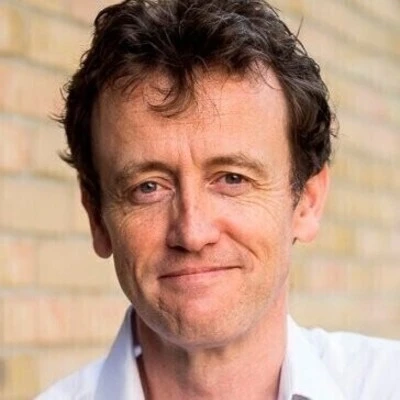
We're recording this video podcast at the annual meeting 2026 in Davos and are joined by one of the world's most distinguished economists. She's the former first deputy managing director and chief economist at the International Monetary Fund. And she's now the Gregory and Ania Coffey Professor of Economics at Harvard University, Gita Gopinath.
Gita, welcome to Radio Davos.
Gita Gopinath: Pleasure to join you Robin.
Robin Pomeroy: So great to have you here. You published an article in the Financial Times a few days ago, a few days before the Davos meeting started. And I'm going to quote you from it. "2025 was a year when everything changed, yet somehow nothing did." What did you mean?
Gita Gopinath: So 2025 was the year when we saw the US impose one of the highest tariff rates that they've had in over a century.
Now they brought it down from extremely high levels, but still the tariff rate was around 14%, much higher than at the start of the year, where it was around 3%.
You also had a lot of policy chaos, a lot confusion about where the rates would settle.
And so you would think that that would have been very consequential for the global economy. But if you look at global growth, global growth for last year was 3.2 percent, pretty much exactly what was projected for growth in 2025 the year before when none of this was on the horizon. It's like nothing happened.
And the reason I wrote that piece was to basically make the point that no, please be careful. Don't be fooled. Everything has changed for the global economy. It hasn't shown up in the growth numbers for a bunch of reasons that I'm happy to get into. But be aware that the world is in a very different place.
Robin Pomeroy: Let's talk about the two things you mentioned then. Why didn't it have that impact? I think a lot of economists were expecting to happen, and then we'll look at maybe what are these fundamental changes that you say.
So the first question then is, why did it not bring GDP growth down?
Gita Gopinath: So there was a time last year when economists thought that this could be highly consequential and even put the US economy in a recession. That was right after Liberation Day and the April 2nd tariffs. So that three-day window, you saw markets reacting very strongly. It looked like something was going to break. But then what did the Trump administration do? They came and they basically put a pause on those tariffs and said, we are opening up time for negotiation with countries.
So one important reason why things turned out better than it was expected was because the actual tariff rates were much lower than what was originally announced would be the tariff rate.
And if you look at the true tariffs being paid by firms as they were importing into the U.S., that's even lower than the statutory rate, which is around 22, 23 percent. The actual tariff rate in terms of what they pay is 14 percent.
Robin Pomeroy: Why is that? Why is there a discrepancy?
Gita Gopinath: So there are a bunch of reasons for it.
One, there have been a lot of exemptions provided to certain products, to certain countries. So tariffs have been announced, but then they've been withdrawn. So the actual tariff rate is very different.
And also if your goods were on the sea when the tariff was imposed, you don't get slapped with a tariff. So there were a lot exemptions and that played an important role.
Now, the reason why the economy did better than expected was also that there were two important upsets to the world economy. One was AI. That was huge. There was a large amount of investment in AI. Stock markets boomed because of that. That was good for wealth and that helped hold up consumption at the top end and encourage consumption at top end of incomes.
Countries that were supplying inputs into the AI boom also did really well. Exporters like Taiwan, South Korea, their growth got a big boost because of AI.
The second is that fiscal policy, and especially in China. There was a lot of fiscal stimulus in China, Germany announced the moving away from the debt break rule, and the effect of that is going to play out over the years, this year and next year. The U.S. economy also has a strong fiscal stimulus this particular year, in 2026. So all of that, is providing support to an economy that's otherwise being pushed back by tariffs.
Robin Pomeroy: And so what has fundamentally changed then? I think you're saying there is still a risk to the downside for economic growth, but are there real fundamental changes that have happened last year that are going to hit us this year?
Gita Gopinath: So the fundamental change that has happened is we've moved away from the rules-based, predictable global trade order.
There is a level of uncertainty that wasn't there before. That uncertainty is affecting businesses, especially small businesses. It takes time for that effective play out.
What I'm concerned about is that last year at least there was no overall retaliation from all of the U.S.'s trading partners. China was the one country that retaliated. Europe did not. But we're starting this year with threats of retaliation from the European Union because of the US's statements on Greenland. Now that can amplify.
So this world where there's so much uncertainty makes it very hard to make investments and to do business.
I like to think of what happened after Brexit. Right after Brexit there were two years when investment continued to go up and everybody thought well this can't really be such a big deal. But then, ultimately, investment slowed. And 10 years later you look back and you say, well, this was really a negative effect on the UK economy. I'm not saying that's the exact effect that would be there on the US because the US is a much larger economy than the UK. But still, all of these changes, not just in terms of international policy but also domestic policy, you know, concerns about questions about central bank independence, those have slower effects but they do show up over time.
Robin Pomeroy: It is an extraordinary time, isn't it, in terms of just the speed of news breaking that someone like you, like economists, it's going to change potentially their outlook for their various economic indicators.
I mean, since you wrote that article in the Financial Times, Donald Trump's announced more tariffs on Europe because of the Greenland thing. I think that's happened between you writing that and then coming here to Davos. We're recording this for anyone watching or listening on the day before Donald Trump gives his special address here in Davos. We'll be publishing this sometime next week. So who knows what might have happened in the interim.
I mean, just kind of anecdotally, you're someone who's been at the forefront of economic analysis for many, many years. Have you seen a time like this before? Is this a different scene?
Gita Gopinath: Well, you know, I was the chief economist at the IMF when we had the pandemic. And that was something that we hadn't seen in a century. So that was a major shift. We could all we couldn't be in the same room together. We had to be working remotely. So that was dramatic.
Compared to that, this is somewhat less dramatic, but still it is a once in a century event with this breakdown of the global order. And we may just be at the beginning of all of this happening.
To your previous question about what is long-lasting, I think what's long- lasting is the complete breakdown of trust between the U.S. And the Europe. I mean that alliance was a critical part of the global economic order. And the fact that that is being ruptured is very consequential.
Robin Pomeroy: But again, maybe by the end of this Davos week and next week when this goes out, we'll know if things are being smoothed out, that relationship, or things are getting tough and there's more of a trade war. We just don't know right now sitting here, do we?
Gita Gopinath: We don't know, but I do believe we are never going back to the time when Europe said that they could rely completely on partnership with the U.S., on their security, and on an economic partnership. That has changed fundamentally.
I think Europe is looking for strategic autonomy. They are figuring out how to rely less on payments that are dominated by U.S. Companies. More generally, how to rely on their own internal economy, their own internal security.
So there's no going back on that, regardless of how this week goes.
Robin Pomeroy: Let's talk about economic growth in your article. You said, I quote, "The global economy is more fragile than headline numbers suggest."
So what are the main risks? You've already described the potential kind of delayed impact of increased tariffs. Are there others?
Gita Gopinath: The sector that did incredibly well last year was artificial intelligence. That was a big boost to the global economy. I think that's a sector where there is still a lot of fragility.
When I wrote the article, I wrote an article last year in The Economist around October where I said that if you had a dotcom like bust, it would wipe out $35 trillion of wealth. That is many multiples. Of what happened during the dot com. It's a much bigger share of current world GDP than it was during the .com. So it can be much more consequential.
Robin Pomeroy: How does it compare to that 2008-2009 recession?
Gita Gopinath: So that was a different crisis. The 2008, 2009, you had also a big financial crisis, but that affected banks. It was much more deeper. It came through the housing sector. It was different.
This comparison is more like the dotcom because it's all about tech. And what could happen if you have a tech boom that ultimately doesn't deliver on its promise, especially in terms of profitability.
So I still think we're in a space where the valuations are stretched. It is difficult for me to see how in this hyper competitive environment all of these companies could make the kinds of profits that justify their level of valuations that we're seeing now. So we could see corrections. That's not a statement of the technology. I think the technology is going to be great. But whether all of the companies are going to make the size of profits to justify the valuations, I still have questions on that.
So I think that is a very important risk to keep in mind. Because financial conditions are actually quite easy everywhere in the world, though it keeps changing on a daily basis depending upon news coming in.
But that is the issue that did not drop. We did not have a financial crisis despite five years of pandemic, Russia invading Ukraine, interest rates going up very sharply.
Could we be building up to a financial crises? I am concerned about that.
Robin Pomeroy: I bet people ask you every day, OK, if there's a bubble, when is it going to burst? And how do you answer that?
Gita Gopinath: There is no formula for predicting exactly when a bubble will burst. It could take some time. Usually there's a trigger. One of the triggers, which is what happened last time, right before the dotcom bust, was the Federal Reserve raised interest rate because they were worried about inflation.
Could we have a situation this time, too, that the Fed needs to raise interest rates because of tariffs, additional tariffs being put on which gets passed through into consumer prices, because of the otherwise general high levels of demand in the U.S. that we're seeing. So if there is surprise inflation and the Fed has to raise interest rates, which is not something markets are expecting, then you could see a sudden tightening in financial conditions and that could prick a bubble.
Robin Pomeroy: Let's talk about the Fed then, there is some pressure on it from the political side from President Trump. How important is it? It seems to be an orthodox view that central banks should be independent of the political cycle so that they can set long-term policies that can contain inflation. What do you see, is that a risk that that might be eroded, that kind of independence in the US and potentially elsewhere?
Gita Gopinath: So I'd say there are two kinds of policies on which economists agree. One is that trade helps countries and people, and yes, it may have some flaws and it needs to be carefully managed, but in general, it is a positive.
The second is central bank independence, which is that if you want to have low inflation in your country, which then will keep interest rates low for you, you do need to have an independent central bank.
Now to be clear, when we say independent central bank, that does not mean the central bank is not accountable to anybody. This is about operational independence, which is, given the mandate that has come from the political class, from Congress in the case of the U.S., given that mandate, the actual execution of that mandate stays within an independent central banks.
Robin Pomeroy: Let's go back to these risks to growth then. You mentioned the potential of a tech bubble or something like the dot-com bubble a couple of decades ago. There are geopolitical risks, aren't there? We've already mentioned Greenland, Iran, Venezuela, all places that America is potentially involved in. There are always geopolitical risks, are there? Do you think this is a particularly risky moment?
Gita Gopinath: Now the geopolitical risks we're seeing right now are profound for at least our generation, if not for at two generations at this point.
We had 80 years of a peace dividend, especially after 1990 and the end of the Cold War. You had countries coming together, closer integration, peace, and there was growth.
It was not perfect. It was absolutely the case that there were jobs that were lost in some countries because of too much of open trade. That was a risk that I think we all have to deal with now.
But that said, what we're seeing now, especially with this shift in terms of the relation between US and Europe, that is something that I don't think anybody predicted last year in Davos. There was a sense that we could see some decoupling between the West and China, but the fact that there would be a breaking up of the alliance of the West is not something that we predicted.
Robin Pomeroy: And is that something that has global implications, or is it just Europe needs to sort itself out? Or is China looking, and Russia is looking, and the Global South is looking at that relationship between the USA and Europe?
Gita Gopinath: It has huge global implications. If you look at Europe itself, I mean, Europe is now going and making trade relations with other countries. The deal on Mercosur, which they signed recently, they've been working on it for many, many years. And though there's still been pushback from member states, they pushed it through. I think it's a statement about the fact that Europe says, well, we need to have some other friends, maybe, and build those other relationships. Similarly in their dealings with China.
The global order is being shifted around. Who you work with, new alliances are being formed, however temporary they may be. But you are seeing those shifts happen.
This is a very consequential relation between the US and Europe. And ruptures of the kind that we're seeing will have big implications for everyone.
Robin Pomeroy: Another risk that economists always flag up is debt. National debt, government debt, being a big risk. Is that just being overshadowed? It's still there, right? But is it being over-shadow by these other things?
Gita Gopinath: If we didn't have this large scale of geopolitical tension and tariffs, that's the risk we would be talking about, which is debt. The fact that almost all countries in the world are sitting on record high levels of debt without a clear path on how that will be brought down is indeed a very important risk that we are facing in addition to everything else that we have.
Robin Pomeroy: So where does growth, where can it come from? You pointed out over the last year massive growth stimulated by investment in AI, which had knock-on effects around the world. You're slightly worried, or you're worried to whatever extent, that this might be a bubble. Are there other areas that we can achieve economic growth?
Gita Gopinath: I do think AI will help with economic growth. There are going to be productivity effects, whether it takes a couple of years or longer, we have to see. But I think that is an important source of growth because it's a general purpose technology. It can transform all fields that we're looking at.
Of course, what we do need to keep our eye on is what's happening with jobs. So are we going to creating growth that is jobless? And that is a risk that we do need to worry about. And I am concerned that especially if this transformation happens very rapidly where there's a real risk of that happening you could end up with a shrinking of the middle class and leading to civil conflict, people protesting that will not, people will not stay quiet in the face of it lots of people losing their jobs.
Robin Pomeroy: How long do you think that will take?
Gita Gopinath: At this moment, given what we know, I think it's quite uncertain. The effect on productivity, we still have a fairly wide range of estimates, anywhere between adding 0.1% to productivity growth on a yearly basis to 1.5% of productivity growth. So there is a big range over there.
Similarly, the impact on jobs. There is a concern that young people coming on the job market are having a harder time finding jobs because of the ability of AI to replace them. But at the same time, there are also young people who are going much more quickly into entrepreneurship because the technology helps them start new enterprises.
So we're still in the phase of figuring this out.
Robin Pomeroy: The energy price and the oil price is something that is very important when it comes to how the economy functions. I wonder whether again that's something like you said, everything changed, nothing changed. You've had the intervention in Venezuela, you've got concerns over what might happen in Iran, these countries with massive fossil fuel reserves. But the oil price, I don't think, has changed that much compared to how dramatic the geopolitical situation is. Where do you see the oil price and energy prices in general going?
Gita Gopinath: So energy prices are, oil especially, is going to be in the low 60s. That's the most likely outcome. The reason why Venezuela didn't have any big effect is because even though it has a large amount of supply, getting that out of the ground is going to take time. There's been such damage to their infrastructure that this is not gonna happen overnight. That will take time, Iran is like about 1% of the oil market. So it is consequential, but it is not a huge effect on oil markets as such and there's a lot of supply coming from other parts of the world.
Robin Pomeroy: What about the energy transition because that was often touted, not least here in Davos, as a driver of growth investment in new types of energy, different types of energy, green energy, energy storage. We're hearing less about that maybe in the headlines right now. Is there still an energy transition going on and is it somewhere that people should be investing in and looking for growth?
Gita Gopinath: There is an energy transition going on, and for several countries, especially for emerging and developing countries that otherwise import a lot of their energy, that is a source of growth for them. It's not just about sustainability, but it's also just about job creation and having to rely less on imported fuel. This is going to be a big source, important source of growth for them. They're investing in it, solar, wind, hydro, all of those different forms of sustainable energy, that's the direction in which that will continue.
I mean China is doing a lot. I think China is continuing to be on the forefront of the green transition. India is also paying attention doing the investments that are needed. Pollution is a big challenge in India right now. So even if you are not so worried about sustainability from a global perspective. The fact that you have to get rid of the high levels of pollution itself will move you in the green direction. And weather events are highly consequential for the world and that will remain the case.
Robin Pomeroy: You mentioned China, I wonder if you could just give us an overview of where you see China's economy going, because it's a very different type of economy to the places we've mostly been talking about up till now, North America and Europe.
Gita Gopinath: China has relied quite a bit on export-led growth in these last two years, because if you look at domestic consumption, that has been fairly weak, and they haven't solved that problem.
So in China, growth for 2025 is around 5%. It's projected to go down to 4.5%.
They still have a problem with their property sector. There was overinvestment in that particular sector. And we still haven't seen reallocation of resources away from property to other markets sufficiently, that is still a challenge.
It's an aging population. The population shrank for the fourth year in a row. That's another headwind. And productivity growth in China has not been very strong.
So for all those reasons, if you look out into the medium term, we should expect China's growth to slow to around 3.5% or so.
China cannot rely on export-driven growth for multiple reasons. One, it's too large an economy. To be able to grow just on the export side. Secondly, other countries are not going to take in such large amounts of goods. They will slap tariffs very quickly, and they would be justified to do that even by WTO roles because of anti-dumping reasons.
So China does need to move towards a growth strategy that is more domestic demand driven. That's going to require stronger social safety for households in China so that people don't feel like they have to save that much. And they have invest in productivity, moving away from state-owned capital to moving to a much more private enterprise.
Robin Pomeroy: And will that, I mean they've made a start in that, do you see that continuing?
Gita Gopinath: They had made a big shift in that right after the great financial crisis. But then I think after the pandemic they seemed to have moved, drifted sideways again back into export led growth.
The most recent 15 plan that they came up with still talks about investing in the new sectors in frontier sectors like AI, frontier energy sectors and so on. And not enough on the need to have high levels of consumption.
So I'm not sure that they've made the switch. I think maybe silently, quietly they recognize that they cannot have overproduction in every sector. That is a problem because you're going to end up with having to worry about prices going too low, which is a program that China has and no other country does.
So they need to do more in terms of reorienting the economy inwards. Relying more on consumption, local demand, human growth, as opposed to external growth. I don't see a big dramatic shift in the policies being made, but so this is going to take time. I suspect they'll only move slowly.
Robin Pomeroy: Industrial policy. This used to be seen as a thing of the past, certainly in the West. Governments getting involved in economies that many economists would say, let the market sort this out. It's come back, hasn't it? Where do you see industrial policy going from here?
Gita Gopinath: So industrial policy has been around for a while. And I would say China did do a lot of it for many, many years. It's not just in the form of providing a direct subsidy or a tax break to companies, but also in terms of cheap credit and cheap land. That generated very large amounts of production capacity in many different sectors, including automobiles, electric vehicles, but, also solar and so on in the case of China.
Now, other countries are also reacting, partly to what happened in China, but also now there is a big concern, especially after Russia's invasion of Ukraine, about national security concerns. And so there is the need to encourage certain kinds of sectors at home, be it chips, be rare earths, be it energy, be it defence, to ensure that you have some level of national security that's still maintained.
So, I expect industrial policy is going to be here for a while. It is still important though to have guardrails because you could end up in a situation where governments are spending a whole lot of money which they just cannot afford given their level of debt. So to do it, if you were going to do, do it in a targeted manner on a temporary basis is going be very important.
Robin Pomeroy: I mean, what are the risks of it, though, if it's done badly?
Gita Gopinath: If it's done badly, firstly you're not going to get any of the benefits of the industrial policy because you end up with misallocating resources and you don't see that in growth and you see that enough jobs being created. That would be one consequence.
The second of course is if you end spending a whole lot and the economy does grow then your debt as ratio of GDP is going to go up even more and how are you going to pay your bills? So the interest rates will go up and that will just be bad for all other parts of that are not benefiting from industrial policy.
Robin Pomeroy: So we're sitting here in Davos looking out to the rest of 2026. I'm going to ask you what you expect to happen in 2026, I'll just quote again from your article in the Financial Times. "The reality is that 2025 was a year when everything changed. The question now is whether 2026 will be the year we correct course." So do you think it will be?
Gita Gopinath: Unfortunately, 2026 has not started off that well with the US push for Greenland and the rupturing of relations further between the US and the European Union. This gives me great concern, so we're certainly not correcting those. We seem to be more on the off course, but I want to remain hopeful.
All the important leaders I hear in Davos. They have an opportunity to come together and I believe they will. So my hope is that they will find a way of de-escalating because that is super important for every human being on this planet.
Robin Pomeroy: By the time this goes out, they will have met. I'm sure there'll be ongoing conversations by the time it goes out in a few days' time. Gita Gopinath, thanks so much for joining us on Radio Davos.
For more analysis of the global economy, check out the Forum's Chief Economist Outlook and the Radio Davos episode on that, featuring the head of economics research at Barclays Investment Bank, Christian Keller. Links to that podcast and the report in the show notes.
We've been recording lots of great interviews here in Davos. To be sure not to miss them, please follow Radio Davos and our sister podcast, Meet the Leader wherever you get podcasts or at wef.ch/podcasts.
I'm Robin Pomeroy at the World Economic Forum, thanks to you for listening and watching and goodbye for now.
"Don't be fooled. Everything has changed for the global economy."
Tariffs, geopolitics and AI are all impacting our economies in ways we might not yet be feeling, says Harvard economist Gita Gopinath.
Speaking at the World Economic Forum's Annual Meeting 2026 in Davos, the former IMF chief economist tells Radio Davos why "the world is in a very different place".
世界の課題を読み解くインサイトと分析を、毎週配信。