
Do you often start the day off on the wrong foot? Maybe your morning commute sours your mood, or the kids are refusing to get ready for school. The result? You arrive at work in a less-than-positive frame of mind.
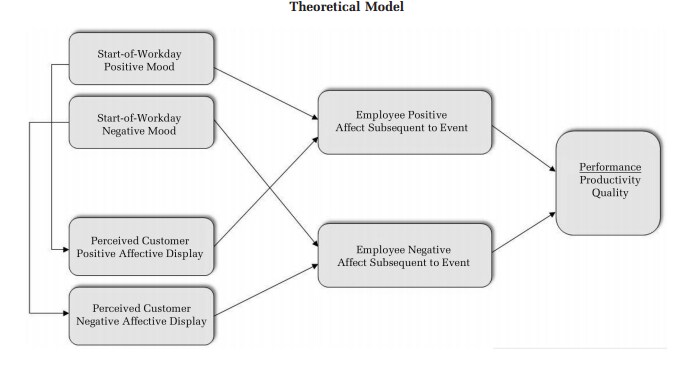
So how does this affect the rest of your workday? A study by Nancy Rothbard of the University of Pennsylvania and Steffanie Wilk of Ohio State University found, perhaps unsurprisingly, that the way you feel first thing in the morning sets the tone for the rest of the day.
Through monitoring the mood of customer service representatives at a call centre, Rothbard and Wilk found that those who “started each day feeling happy or calm usually stayed that way throughout the day, and interacting with customers tended to further enhance their mood”.
Employees who started the day in a negative frame of mind, on the other hand, found it difficult to shake off. In fact, their mood tended to worsen throughout the day.
Employees’ moods had a clear impact on work events, performance and interactions with customers, the research indicated. “We saw that employees could get into these negative spirals where they started the day in a bad mood and just got worse over the course of the day,” Wilk noted.
Those in a negative mood also took more breaks from work than their happier colleagues – resulting in a productivity loss of more than 10%.
In an article for the Harvard Business Review, Rothbard suggested ways that senior colleagues can help to improve the mood in the workplace. “Managers might send out morale-boosting messages in the morning, or hold a regular team huddle to help people transition and experience a positive mood as they start their workday.”
Giving people time in the morning to chat with colleagues, and resisting the urge to fire off late-night emails could also improve employee happiness, she says.
The researchers also recommend providing free food. “Countless psychological studies have used cookies as a way to generate positive mood in participants,” Rothbard wrote in an article for the Wall Street Journal.
Employees themselves can also take steps to improve their frame of mind, whether it's finding a different route to work, allowing time for a morning coffee, or even giving themselves a pep talk before they walk through the door.
Have you read?
What happens to your well-being when work eats into free time?
16 ways to create your own happiness at work
How to be more productive at in the office