More and more people around the world identify themselves as global citizens rather than citizens of their country, according to a BBC World Service poll conducted by GlobeScan.
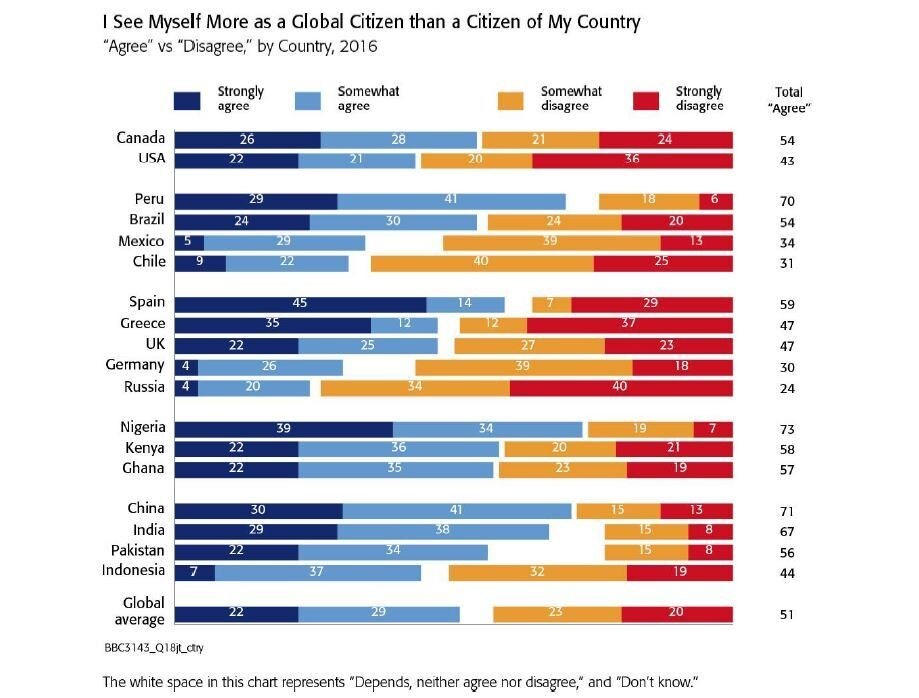
The big increase of this sentiment is being driven largely by emerging economies, such as Nigeria (73% feel they are global citizens), China (71%), Peru (70%), and India (67%).
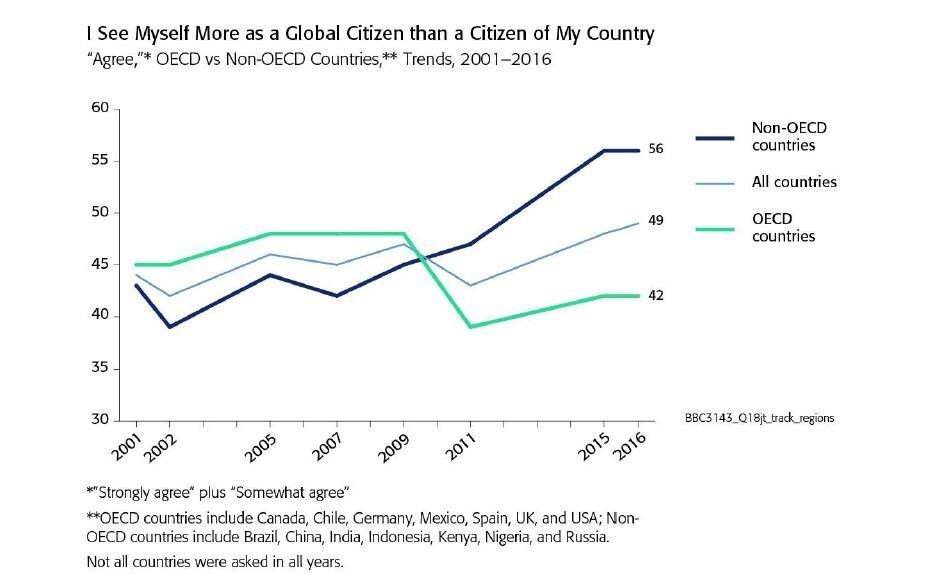
Over 20,000 people worldwide in 18 countries took part in the poll, and it's the first time in 15 years of tracking that more than half of the respondents saw themselves as global citizens rather than national citizens.
Conversely, the poll indicates a growing divide between industrialised countries and developing economies. Before the financial crisis in 2008, the concept of global citizenship was equally supported in both country groupings. But since 2009, the trend has followed a downwards trajectory, with Germany hitting the all-time low with only 30% of respondents identifying themselves as global.
Among richer nations, 59 percent of those asked in Spain considered themselves to be more global than national, followed by Greece (47%), the UK (47%), Germany (30%), and Russia (24%).
Read the full results of the poll at GlobeScan.