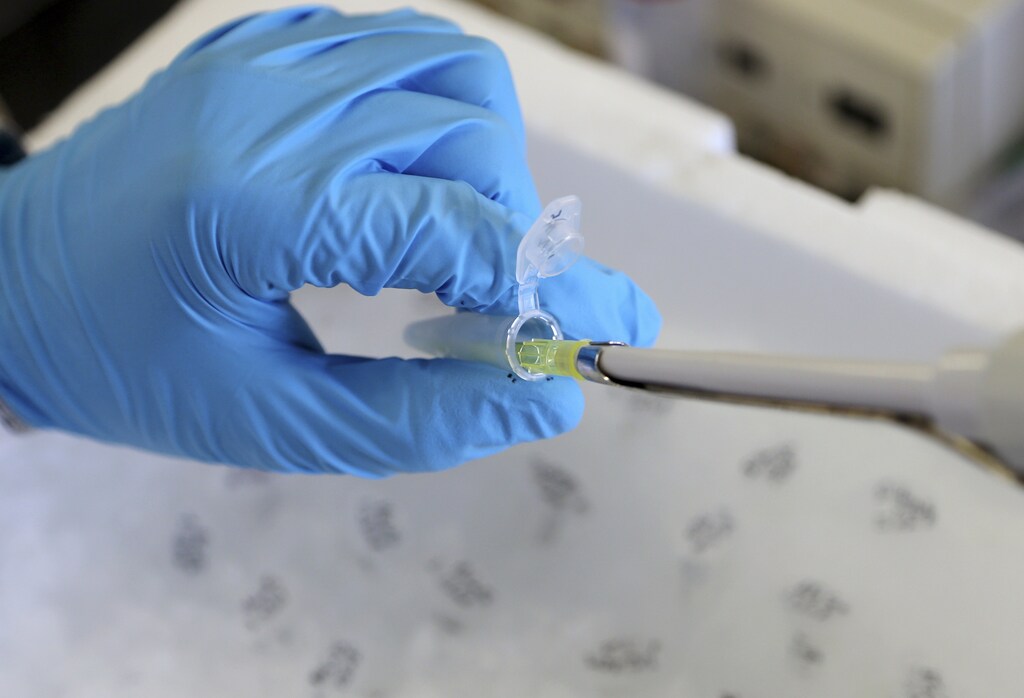
Salmonella has a unique characteristic that allows it to penetrate cell barriers and replicate inside its host. Now, scientists have developed a nontoxic strain to target cancer cells.
“Salmonella strains have a natural preference for infiltrating and replicating within the cancer cells of a tumor, making the bacteria an ideal candidate for bacteriotherapy,” says Robert Kazmierczak, a postdoctoral fellow in the division of biological sciences at the University of Missouri and a senior investigator at the Cancer Research Center.
Bacteriotherapy is the use of live bacteria as therapy to treat a medical condition, like cancer.
For the study, published in the journal PLOS ONE, researchers developed CRC2631, a Salmonella strain genetically modified to render the bacteria nontoxic and enhance its natural ability to target and kill cancer cells—without harming normal, healthy cells.
The Salmonella strain was administered directly into the circulatory system of mice with prostate cancer.
“We found that the mice tolerated the treatment well and when examined, their prostate tumors decreased by about 20 percent compared to the control group,” Kazmierczak says.
“One of the most remarkable aspects of Salmonella is its ability to target, spread and persist inside the tumor. We are taking advantage of this ability by using Salmonella to carry or generate effective chemotherapeutic drugs, concentrating them at and throughout the tumor."
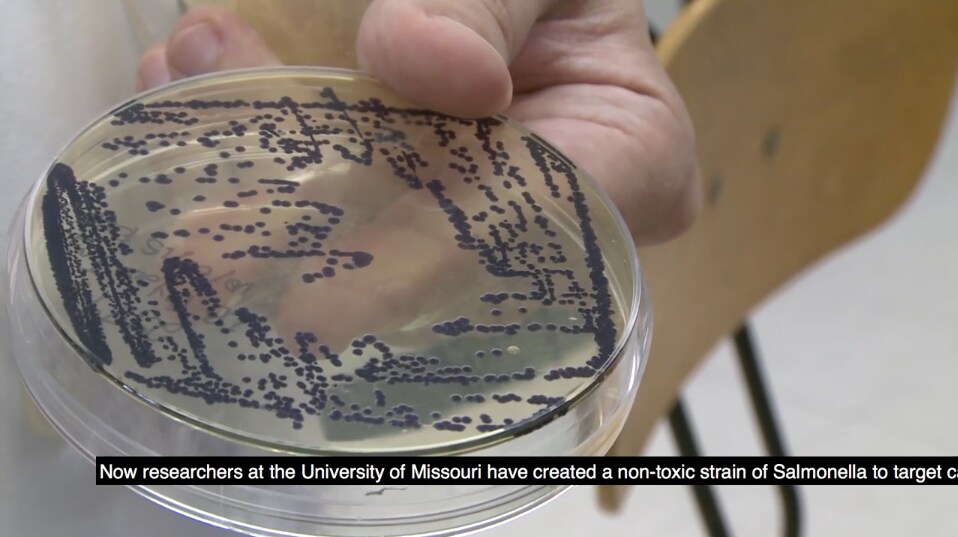
“The goal of this treatment is to develop a bacterial vector that can destroy the tumor from the inside out and reduce the amount of side effects endured by patients with cancer.”
The CRC2631 strain is derived from a Salmonella sample that was stored in a test tube at room temperature for more than 50 years. The sample originates from the Demerec collection, a collection of mutant strains of Salmonella collected by geneticist Milisav Demerec and curated by Abraham Eisenstark, scientific director at the CRC and professor emeritus of biological sciences.
The collection contains more than 20,000 different samples, with half of the samples housed at the Cancer Research Center where researchers focus on three areas of cancer research: early detection, targeted treatment, and new, effective chemotherapy.
“The uniqueness of CRC2631 differentiates our Salmonella strains from other universities trying to achieve the same goal; it is one of a kind,” Eisenstark says. “The strain of Salmonella we are using is essential to the success of our study.”
The Cancer Research Center funded the work.