Greece seems sort of fixed. At least for now.
After a July 5 referendum that saw Greek citizens vote against Greece’s latest bailout, the Greek government struck basically the same deal with its creditors anyway.
This is what Europe wanted, what markets wanted, and this deal avoided a worst-case scenario that would’ve seen Greece potentially pushed out of the euro currency union.
But the real drama surrounding Greece, the long-term, existential drama, is that Greece has tons of debt outstanding and it seems like it’s going to be very hard for Greece to pay all of it back, on time or otherwise.
In a note to clients, Credit Suisse includes 2 charts, one showing the monthly repayment schedule for the next year, and another showing what Greece owes over the next 5 years.

Credit Suisse

Credit Suisse
And while Greece has just gotten more bailout funding in order meet its upcoming obligations — that is, after all, what a bailout is for — these bailouts are conditional, basically, on the Greek government implementing agreed-upon reforms and these reforms actually working to boost the Greek economy.
Credit Suisse notes that, “Recent declarations from officials in Greece and in Europe more generally suggest that the focus is indeed shifting away from austerity and debt relief, and more towards reforms and ways to boost growth through European- supported investment projects.”
So this seems like a good thing.
But these are, however, just declarations. As it stands right now, Greece has a lot of debt due over the coming months and years.
And it’s also worth keeping in mind that one year ago Greece seemed to be making measured progress towards meeting its obligations. Six months later, there was a new government, a new Greek crisis, and, eventually, a Greek default.
Greece has seemingly come back from the brink, but the drama is not over.
This article is published in collaboration with Business Insider. Publication does not imply endorsement of views by the World Economic Forum.
To keep up with the Agenda subscribe to our weekly newsletter.
Author: Myles Udland is Business Insider’s markets editor.
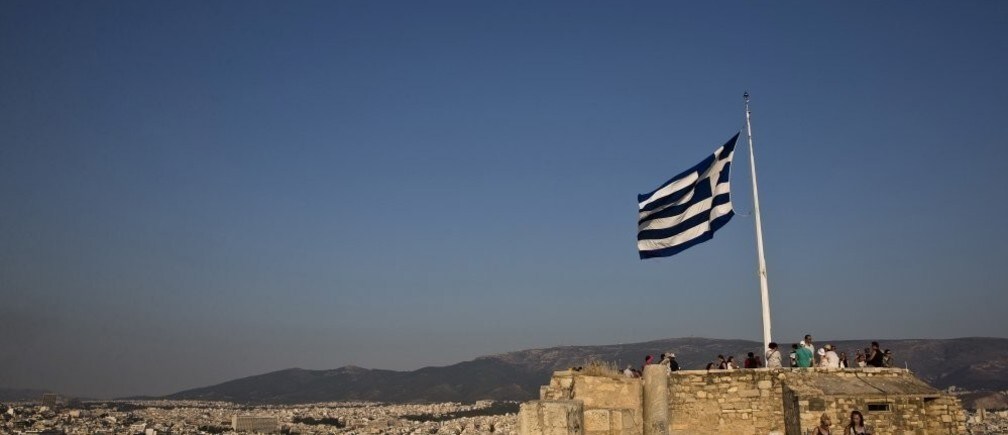
Image: A Greek flag flutters in the wind as tourists visit the archaeological site of the Acropolis hill in Athens. REUTERS/Ronen Zvulun


