With the debate surrounding Brexit intensifying ahead of June's referendum, and eurosceptic parties gaining support across the continent, you'd be forgiven for thinking the tide has turned against European integration. Yet a detailed report from Bertelsmann Stiftung suggests that when it comes to Europeans' relationships with the EU the picture is far more complicated.
Data from a survey taken across the 28 member states in July 2015 revealed strong support for membership and further integration, dissatisfaction with the direction of EU policy, and notable regional differences in opinion.
Support for membership and knowledge about the EU are high
Across the 28 member states, support for continued membership is high. When asked whether in a referendum they would vote to stay in the Union or leave, 71% of respondents said they would vote to remain.
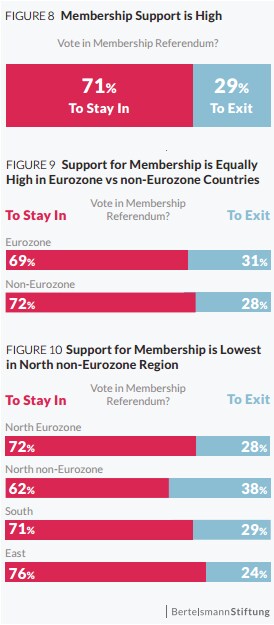
As the graphic highlights, there is no difference in support between those countries that have adopted the euro and those that haven't. Northern non-Eurozone nations are slightly more eurosceptic than the rest.
Knowledge about the EU is also high. Respondents were asked two factual questions about the EU, and 68% of people were able to answer at least one correctly.
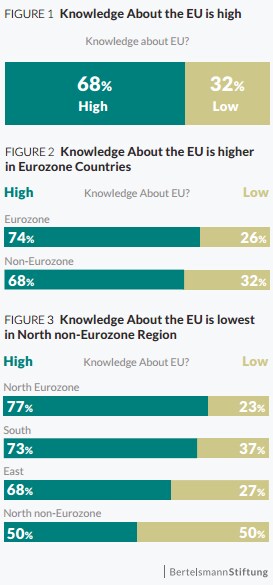
Knowledge about the EU was lowest in the northern non-Eurozone area and in the east. The report's authors put the difference down to the financial crisis: "...knowledge about the EU is higher in regions that have the euro and thus were more affected by the crisis, either as creditors or debtors.”
Political and Economic Integration
Some 59% of people wanted to see more integration across Europe, while just 24% wanted to see the level of integration reduced.
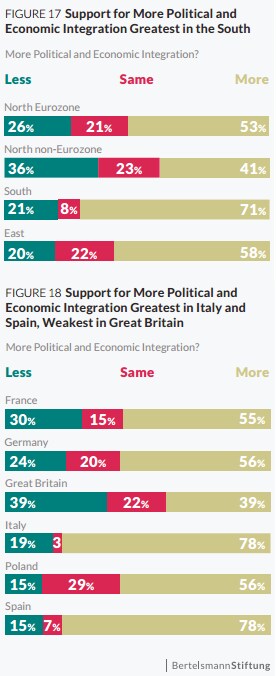
Even last summer, support for integration was weakest in Great Britain, while it was strongest in Italy and Spain.
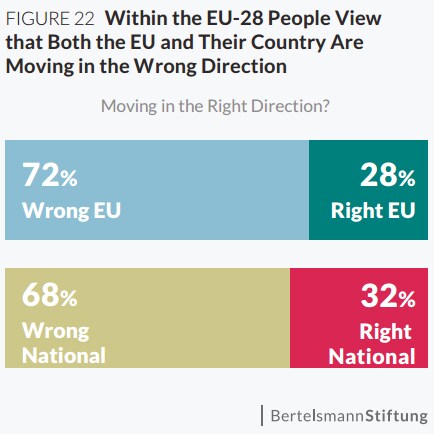
This support did not, however, extend to approval of current EU policy direction. Just 28% of people felt that EU policy was moving in the right direction.
So what do Europeans want?
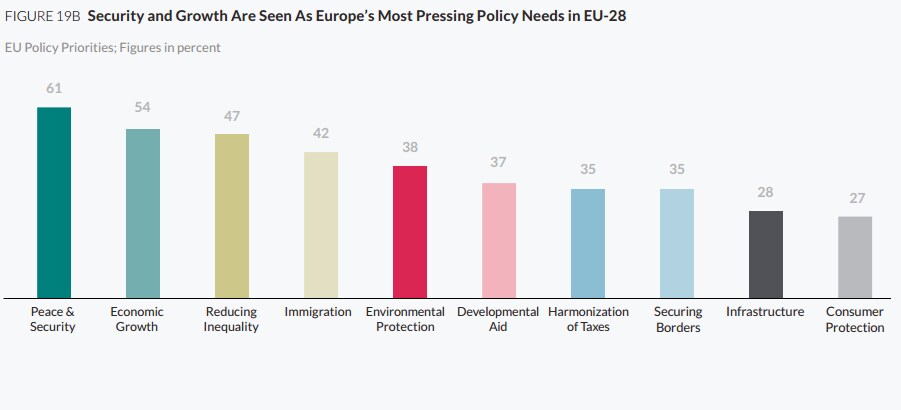
Even last summer, before events in Paris and Brussels and neighbouring Turkey, peace and security was seen as Europe’s most pressing policy need. Three in five people believed that this should be at the top of the EU agenda.
This was followed by economic growth and reducing inequality – around half of respondents saw these as of vital importance.
Have you read?