In 2015, 2.6 million first-time residence permits were issued in the European Union (EU) to non-EU citizens, a record number and a rise of 12.1% compared with the year before.
The highest number of permits was issued in the United Kingdom. Almost a quarter of the total of all the permits issued in the EU were issued in the country – 633,000 in total, according to data compiled by Eurostat.
Poland was next, issuing over half a million permits (542,000), which represents over a fifth of all permits.
France issued close to a quarter of a million permits (227,000) – less than 10% of the total. Germany issued 195,000, Spain issued 193,000 and Italy issued 179,000.
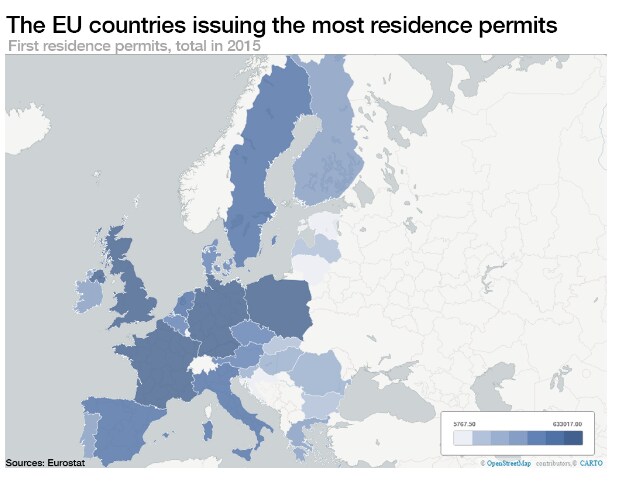
However, if you look at the number of visas issued compared with the population of a country, then the top spots change.
Malta comes in first, with 23.1 first-time residence permits issued per thousand people in the population. Cyprus is second, with 18.4 issued per thousand; Poland third with 14.3; Sweden fourth with 11.3; and the UK fifth with 9.7.
Who wants the EU visas?
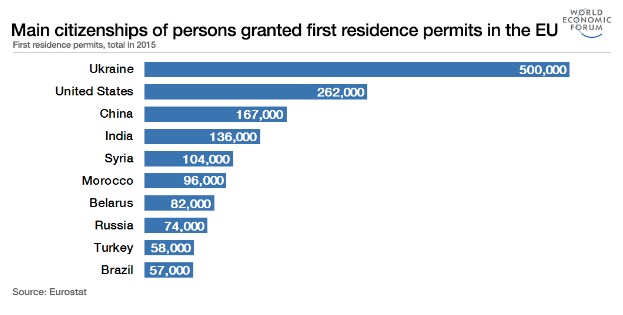
Almost a third of residence permits were granted to citizens of Ukraine and the United States. Around half of all first residence permits issued in the EU in 2015 were issued to citizens of only six countries: Ukraine, US, China, India, Syria and Morocco.
Citizens of the Ukraine received 500,000 visas, or 19.2% of the total number of first residence permits issued in the EU. The US received a little over half that: 262,000, or 10.0% of the total. China came next with 167,000 visas issued, 6.4% of the total.
Why are people moving?
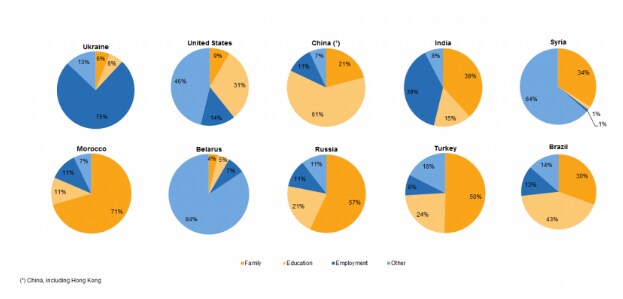
The main reason people sought visas in the EU was to be with family. Almost a third of all first residence permits issued in the EU in 2015 were granted for family reasons. The second most popular reason was for employment, and the third education.
The reasons people seek an EU visa vary widely from country to country. This chart shows the motivation behind the move by country. For example, the overwhelming majority of Ukrainians sought a visa in the EU (primarily Poland) for employment reasons, whereas most Moroccans and Turks sought an EU visa for family reasons. Chinese and Brazilians, on the other hand, were given residence permits mainly for education reasons.
Where are they going?
People seeking employment are heading to Poland, while education is a big draw for arrivals in the UK.
Poland awarded 53% of all the permits issued for employment reasons in the EU in 2015, and was by far the top destination for employment-related permits.
The United Kingdom issued 44% of the total permits given for education reasons.