En 2019, el consumo de internet superó al de la televisión

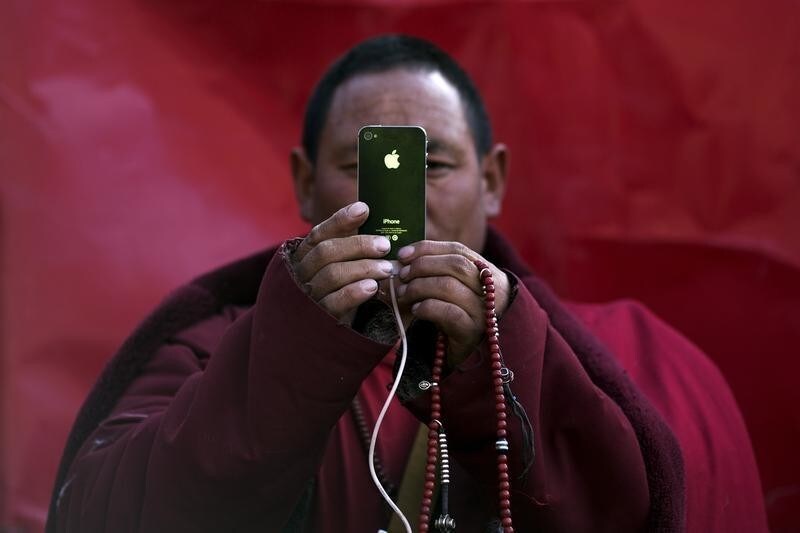
A Tibetan Buddhist monk takes pictures with his smartphone of a daily chanting session at a Buddhist laymen lodge during the Utmost Bliss Dharma Assembly, the last of the four Dharma assemblies at Larung Wuming Buddhist Institute in remote Sertar county, Garze Tibetan Autonomous Prefecture, Sichuan province, China early October 30, 2015. The eight-day gathering of people chanting mantras and listening to teachings of monks starts every year around the 22nd of the ninth month on Tibetan calendar, the great day of Buddha's Descending from Tushita Heavens. The Larung Wuming Buddhist Institute, located some 3700 to 4000 metres above the sea level was founded in 1980 by Khenpo Jigme Phuntsok, an influential lama of Nyingma sect of Tibetan buddhism with only around 30 students but is now widely known as one of the biggest centres to study Tibetan Buddhism in the world. Picture taken October 30, 2015. REUTERS/Damir Sagolj TPX IMAGES OF THE DAY - GF20000043731
Image: REUTERS/Damir Sagolj

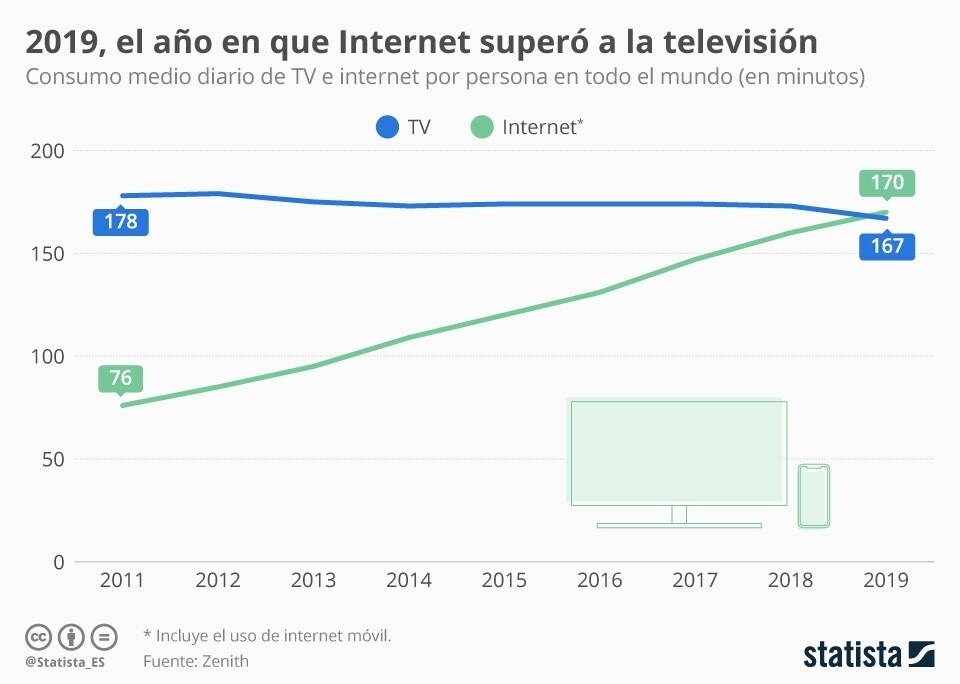
De acuerdo con el último informe de la consultora Zenith Media, el consumo total de medios (televisión, radio, internet, entre otros) ha alcanzado hasta el momento un promedio de ocho horas diarias por persona. Además de lograr un récord en la cantidad de tiempo dedicado al consumo de medios, 2019 será recordado como el año en el que internet destronó, por primera vez en la historia, a la televisión como plataforma estrella de los medios de comunicación.

Tal y como muestra esta infografía de Statista, en lo que va del año el consumo promedio online se situó en los 170 minutos diarios por persona (es decir, dos horas y 50 minutos), contra 167 minutos en promedio para la TV. Detrás de la popularidad de los medios digitales está en gran medida el creciente uso de internet en los teléfonos móviles, cuyo consumo alcanzó los 130 minutos por día.
ライセンスと再掲載について
世界経済フォーラムの寄稿文は、クリエイティブ・コモンズ表示-非営利-改変禁止 4.0 国際ライセンスおよび同フォーラムの利用規約に従い、再掲載が可能です。