We’re all searching for ways to become better leaders and communicators.
And in times of high-stress in the office, it’s even more difficult to lead effectively — or communicate with irate or anxious colleagues.
That’s why it’s important that everyone — not just those in positions of power — become “socially intelligent.”
In a recent LinkedIn post, David Goleman, author of “What Makes a Leader: Why Emotional Intelligence Matters,” reveals how socially intelligent leaders shine in times of distress at the workplace, and explains how to become one.
In times of trouble, a socially intelligent leader knows how to take control of the situation, and the steps necessary to appease all parties and solve the issue as quickly as possible, he explains.
And in order to become a socially intelligent leader, professionals must first ensure that they’re focused on their work: “Socially intelligent leadership begins with being engaged and focused on your work,” he writes. “Leaders at all levels must uphold their responsibility to maintain a productive environment.”
This coincides with being in-tune to your role as a leader. Once you’re focused on productivity and are aware of the importance of your work, you can better address your colleagues’ struggles and setbacks, and know how to respond thoughtfully. In any dilemma, that is the key aspect of a socially intelligent leader.
“If you’re disengaged from your role, you won’t be able to put others at ease,” Goleman says. “An engaged leader can tap into her innate social intelligence — discerning how people feel and why, expressing appropriate concern, and interacting skillfully to encourage positive states of thinking.”
Tapping into social intelligence is important because people are most responsive and when they feel like they’re a valued part of the team, and their feelings are considered. Social intelligence is a necessary trait for a good leader to possess in a time of conflict.
“When colleagues express frustration, a socially intelligent leader knows how to listen carefully, empathize, and take measures to help improve conditions,” Goleman writes.
Being a socially intelligent leader isn’t about having all of the answers, it’s about knowing how to address the matter appropriately, and with compassion. When a problem presents itself, that’s just one part of it — it’s crucial that you also address the needs and fears of the people who have been affected by it.
“Even when these measures fail, they can provide emotional support to the person in distress,” Goleman says. “Paying attention to someone’s concerns actually allows that person to process them faster, shortening the time spent ruminating.”
But if you’re not a big fan of confrontation — or consoling — looking the other way is not the answer. Goleman explains in the post that avoiding the problem will not only resolve nothing, but will make matters worse for the coworker in question, and the relationship. “By ignoring these demonstrations of anger and frustration, a leader will only encourage the person to seethe… and then seethe some more about being ignored!”
And even if the problem or frustration seems unwarranted or insignificant, then it’s still no reason to discount a distressed colleague. To be a socially intelligent leader, it’s imperative that you sympathize as much as possible, and try to see the issue from all perspectives. No one wants to feel neglected in a stressful situation.
“Keep in mind: As a socially intelligent leader, you can do this even when a person’s complaints seem truly unfounded,” he writes. “You don’t need to condone a reaction; but you should acknowledge the emotions behind that reaction, and suggest a couple of solutions. This will at least decrease the magnitude of any harmful emotions.”
This article is published in collaboration with Business Insider. Publication does not imply endorsement of views by the World Economic Forum.
To keep up with the Agenda subscribe to our weekly newsletter.
Author: Hope Restle is an editorial intern at Business Insider, writing about careers.
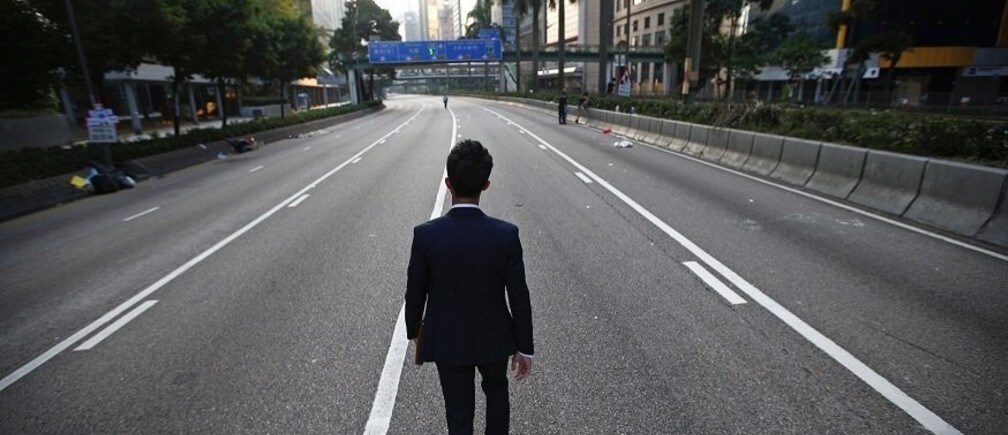
Image: A man walks along an empty street near the central financial district in Hong Kong. REUTERS/Carlos Barria.