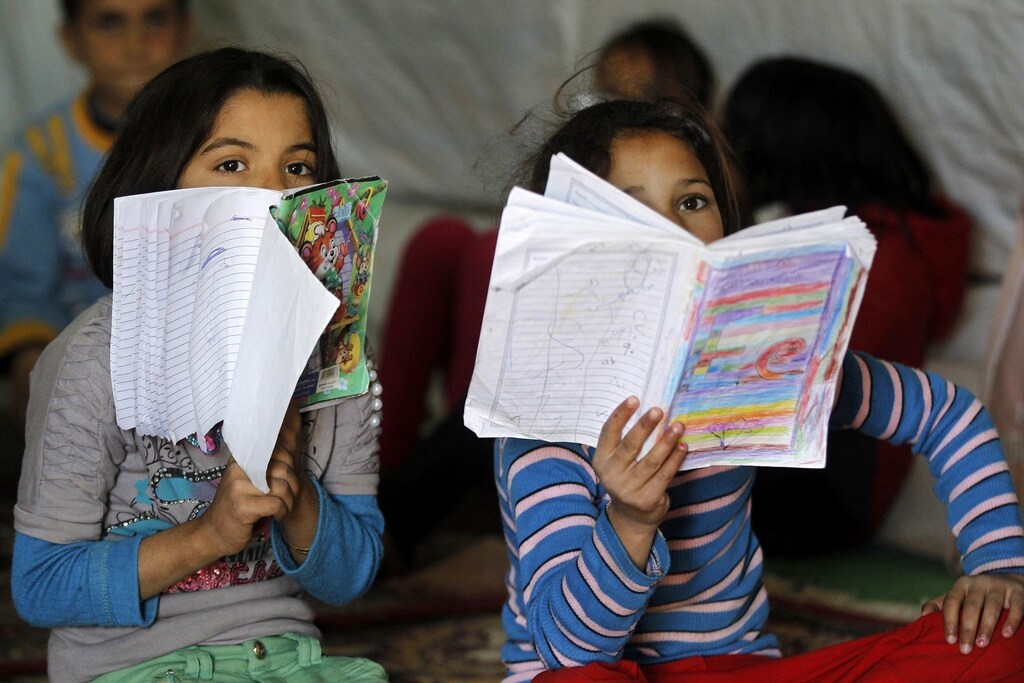
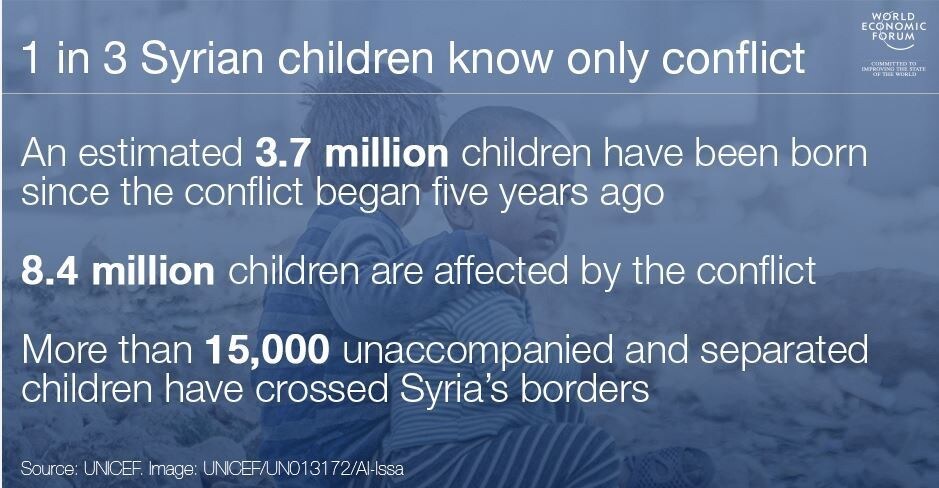
An estimated 3.7 million – one in three – Syrian children have been born since the conflict began five years ago, their lives shaped by violence, fear and displacement, the UN’s children’s agency said.
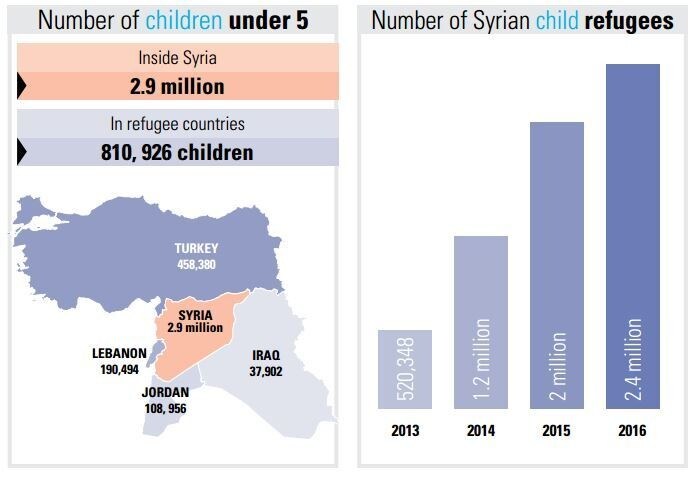
Source: UNICEF
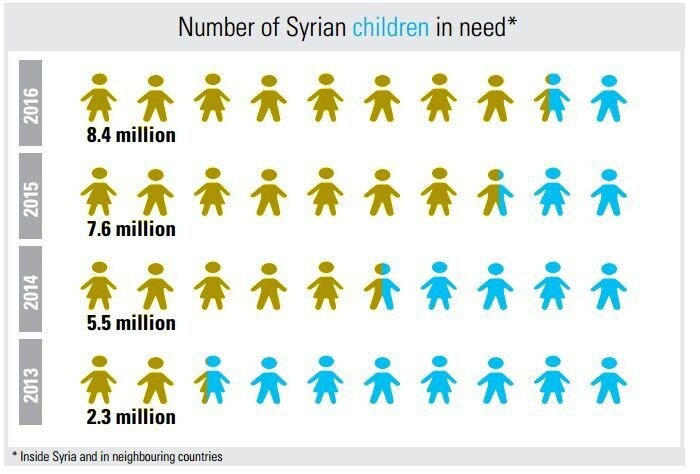
UNICEF’s No Place for Children report estimates that in total the war has affected more than 80% of Syria’s children – some 8.4 million – either inside the country or as refugees in neighbouring countries. It says that around 306,000 children have been born as refugees since 2011.
Dr Peter Salama, UNICEF’s Regional Director for the Middle East and North Africa, said: “In Syria, violence has become commonplace, reaching homes, schools, hospitals, clinics, parks, playgrounds and places of worship.”
UNICEF verified nearly 1,500 grave attacks on children in 2015 – more than 60% of which were instances of killing and maiming as a result of explosive weapons used in populated areas. More than one-third of these children were killed while in school or on their way to or from school.
In Syria’s neighbouring countries, the number of refugees is nearly 10 times higher today than in 2012. Half of all refugees are children. More than 15,000 unaccompanied and separated children have crossed Syria’s borders.
Lost childhoods
Around 7 million now live in poverty, which has led to growing numbers of children being forced to leave school to work, marry young or join armed groups, UNICEF said.
“Five years into the war, millions of children have grown up too fast and way ahead of their time,” Salama said. “As the war continues, children are fighting an adult war, they are continuing to drop out of school, and many are forced into labour, while girls are marrying early.”
In refugee camps in Jordan, one-third of marriages involve girls under the age of 18 – triple the number in 2011.
In the early years of the conflict, most of the children recruited by armed forces and groups were boys between 15 and 17 years old, who were used primarily in support roles away from the frontlines.
Since 2014 armed groups have been recruiting younger children – some as young as seven. More than half the UNICEF-verified cases of children recruited in 2015 were under 15 years old, compared to less than 20% in 2014.
UNICEF said these children are receiving military training and are in combat roles, or risking their lives on the frontlines carrying and maintaining weapons, manning checkpoints, and treating and evacuating the war wounded. Children are also being used as executioners or snipers.
Education
The report says school attendance rates inside Syria have hit “rock bottom”. UNICEF estimates that more than 2.1 million children inside Syria, and 700,000 in neighbouring countries, are out of school.
In an effort to tackle the problem, UNICEF and partners launched the No Lost Generation initiative, which aims to provide learning opportunities to young Syrians.
“It’s not too late for Syria’s children. They continue to have hope for a life of dignity and possibility. They still cherish dreams of peace and have the chance to fulfill them,” Salama said.
What can the international community do?
The report calls on the global community to undertake five critical steps to protect a generation of children.
- End violations of children’s rights
- Lift sieges and improve humanitarian access inside Syria
- Secure US$1.4 billion in 2016 to provide children with learning opportunities
- Restore children’s dignity and strengthen their psychological wellbeing
- Turn funding pledges into commitments. UNICEF has received only 6% of the funding required in 2016 to support Syrian children both inside the country and those living as refugees in neighbouring countries.
Source: UNICEF
Have you read?
What’s really going on in Syria?
Let's be the first generation to put every child in school
This drone footage captures the full extent of Syria’s destruction