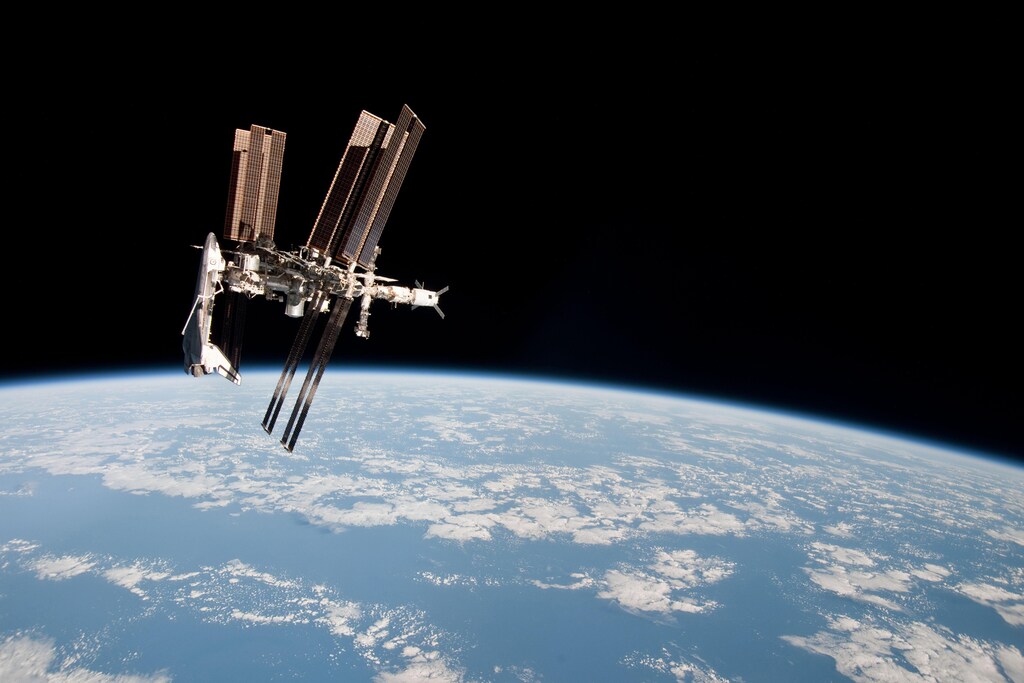
Imagine you’re an astronaut, zooming about in space. Suddenly your spacecraft malfunctions. You could fix the problem immediately, but you don’t have the right tools. Instead you wait days, weeks, even months for replacement parts.
Three-dimensional printing in space could soon make this dilemma a thing of the past. NASA’s first commercial 3D printer is now up and running on the International Space Station and is printing tools.
The Kobalt wrench, as shown below, allows astronauts to carry out essential maintenance work and even has a special fastening feature so it doesn’t get lost in zero gravity.
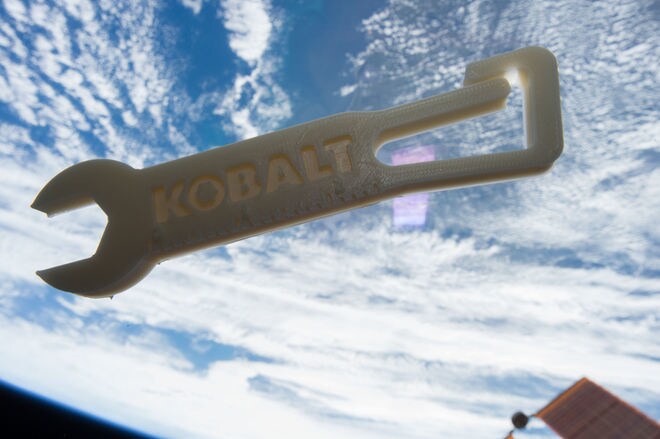
The Additive Manufacturing Facility (AMF) is the result of a partnership between NASA and 3D-printing company Made in Space, and users on Earth can pay to use it to print objects on the space station.
This ability to manufacture tools in space in a matter of hours could revolutionize space travel because astronauts will no longer have to wait for replacement parts to reach them.
It could also make space travel cheaper: NASA estimates that it costs $10,000 to send just one pound of materials into space.
In addition, being able to 3D print objects from space could open up new possibilities for inhabiting other planets.
NASA is currently experimenting on Earth with substances that resemble Martian sand to see whether it could be used as “ink” to 3D print building materials on Mars.
The European Space Agency (ESA) is also looking at whether lunar dust could be used to 3D print an entire moon base. It is already able to print out stone-like building blocks weighing 1.5 tonnes each.
Have you read?
Why 3D printing is taking off in space
2015 was a major year for space exploration
10 ways 3D printing can change the world


