A list of some of the week’s most interesting stories on economic growth and social inclusion.
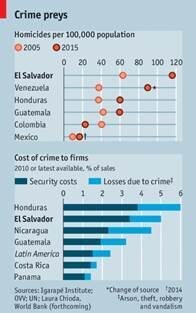
1. Facts and figures. A study estimates that the economic cost of crime in El Salvador is as high as 16% of the country’s GDP. The below chart on Latin America shows how damaging corruption and violence can be to economic growth and social inclusion – and why it should be taken seriously in assessments of the inclusivity of growth. (The Economist)
2. GDP is increasingly questioned as a metric to measure economic prosperity. Another approach is to focus on well-being. (BCG Perspectives)
3. The US peer-to-peer economy – think Airbnb, Uber, Lyft – is more frequently used by people with higher incomes and better education. (MIT Technology Review)
4. The rise of the Athenian participatory democracy was linked to the development of a fiscal system and growing financial literacy, says this article. (The Atlantic)
5. This list of briefing papers explores the China-Africa relationship, opportunities and challenges for greater growth and prosperity in the region. (Overseas Development Institute, ODI)
6. Nobel laureate Edmund Phelps on what is needed to halt the slowdown in productivity growth. (Project Syndicate)
7. On that note: what are the recent and longer term trends in productivity levels and growth in OECD and some G20 countries? A new OECD publication documents just that. (Organisation for Economic Co-Operation and Development)
8. Is a guaranteed basic income the future of welfare? (Financial Times)
9. The G7 are concerned about a potential Brexit, calling it a “serious risk to growth”. (The Guardian)
10. I was invited by asset TV to talk about inequality and emerging markets. Watch the video here. (Asset TV)