Steel Industry
Click here to download the Steel Industry Net-Zero Tracker →
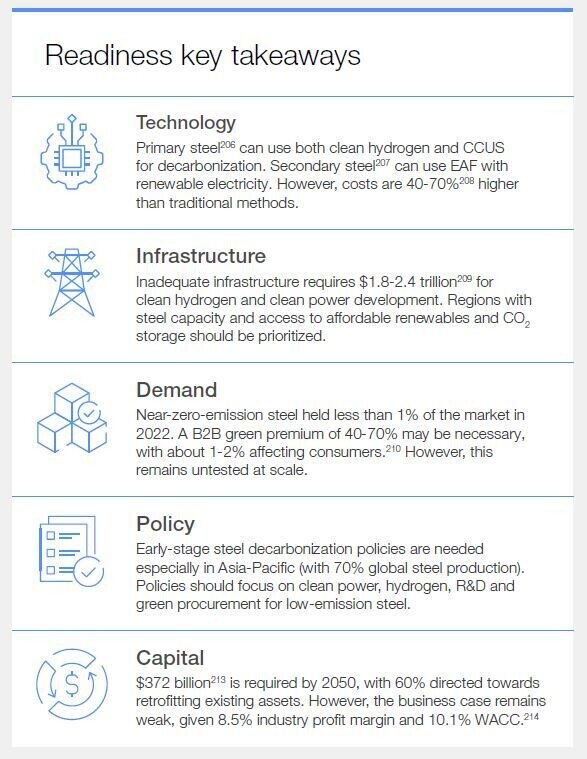
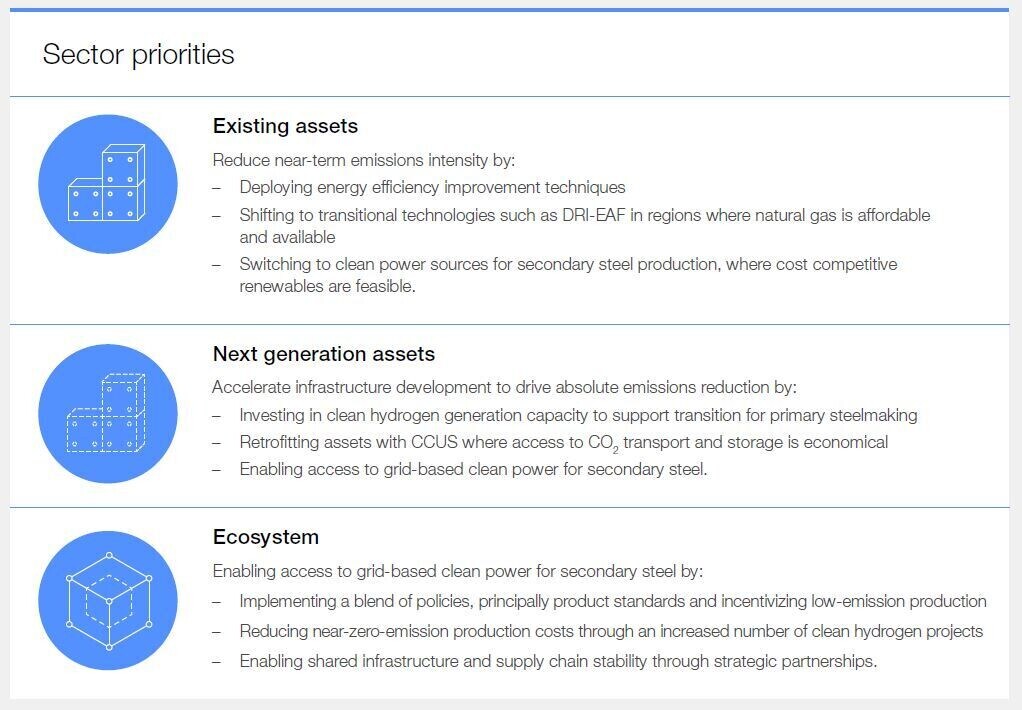
For primary steelmaking clean hydrogen-based DRI-EAF has emerged as the main decarbonization pathway, whereas secondary steel needs to switch to clean power sources.
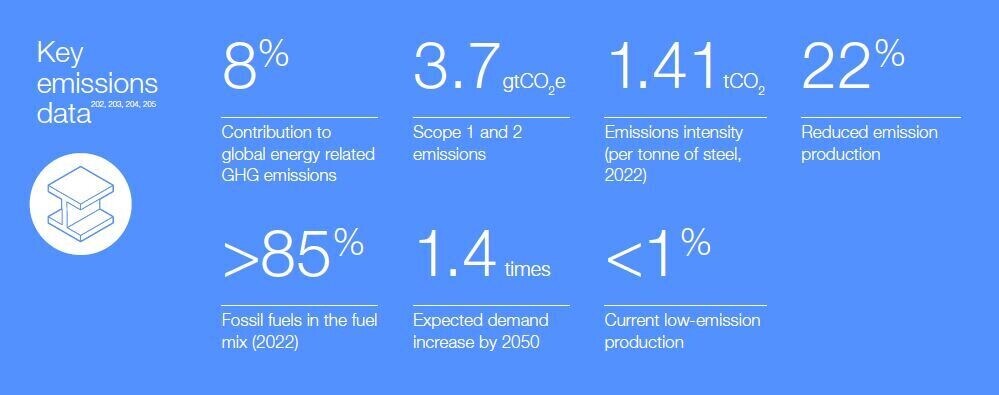
Stated energy transition goals
- The industry targets a 45% reduction in intensity for primary steel and a 65% reduction for secondary steel by 2030, and net-zero emissions by 2050.211
- 70%212 of large publicly traded steel companies consider climate change in their decision-making processes.
Emission focus areas for tracker
Steel emissions can be divided into two main categories:
1. Energy-related emissions are primarily due to coal use in the blast furnace basic oxygen furnace (BF-BOF) and EAF processes to produce molten steel for primary steel production.
2. Process-related emissions emanate from the use of coke or natural gas as a reducing agent to convert iron ore into iron for primary steel production.
世界経済フォーラムの寄稿文は、クリエイティブ・コモンズ表示-非営利-改変禁止 4.0 国際ライセンスおよび同フォーラムの利用規約に従い、再掲載が可能です。